
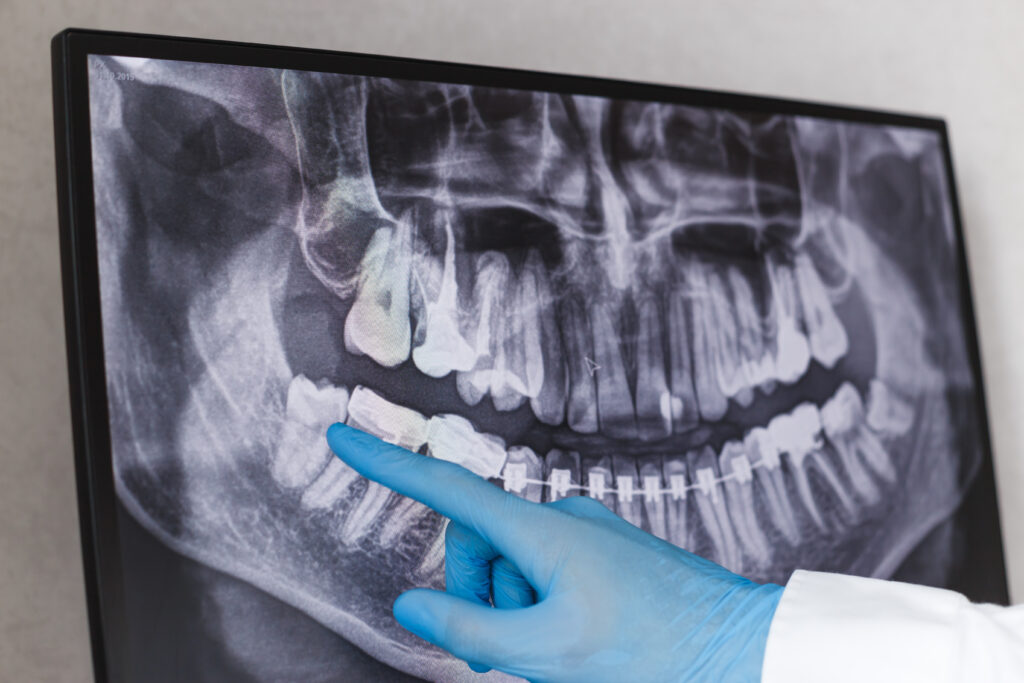
Wisdom teeth—your third molars—typically emerge in your late teens or early twenties, often causing problems due to insufficient space in your jaw. When these teeth become impacted, grow at awkward angles, or threaten adjacent teeth, removal becomes necessary to prevent pain, infection, and damage to adjacent teeth. Dr. Long has extensive experience with impacted wisdom teeth removal and consistently achieves excellent outcomes for patients requiring this common procedure.
Most people develop four wisdom teeth, but not everyone has room for them to emerge properly. Impacted wisdom teeth remain trapped beneath the gum line or grow at angles that push against neighboring teeth. Even partially erupted wisdom teeth create pockets where bacteria accumulate, leading to repeated infections, gum disease, and potential damage to the roots of nearby molars. Early removal—typically during the late teens or early twenties—prevents these complications and allows for easier extraction and faster healing compared to removal later in life.
Dr. Long’s systematic approach to wisdom tooth extraction prioritizes your comfort and safety throughout the process. We offer IV sedation administered by a certified nurse anesthetist (CRNA) for patients who prefer to sleep through the procedure, ensuring a comfortable experience with no memory of the treatment. Whether you’re having one wisdom tooth removed or all four at once, our goal is to make the process as smooth and stress-free as possible.
Wisdom teeth that cannot fully emerge through the gum line or are growing at angles toward other teeth require removal to prevent damage and complications. Impacted teeth can cause pain, infection, and crowding even when you’re not currently experiencing symptoms.
Teeth that have partially broken through the gums create pockets where bacteria accumulate, leading to repeated infections called pericoronitis. These partially erupted teeth are difficult to clean properly and often require removal to eliminate the recurring infection source.
Impacted wisdom teeth can develop cysts or tumors around them, which can damage your jawbone and adjacent teeth. Regular monitoring through X-rays helps identify developing cysts early, and removal of the wisdom tooth eliminates the risk of continued cyst growth.
Removing problematic wisdom teeth before they cause serious complications prevents infection, damage to adjacent teeth, cyst formation, and crowding that can undo years of orthodontic treatment. Early removal is easier on patients and reduces the risk of complications compared to waiting until problems develop.
We offer IV sedation administered by a CRNA for patients who want to sleep through their wisdom tooth extraction. This sedation option provides complete comfort during the procedure with no memory of the treatment, making even complex extractions feel effortless from the patient's perspective.
Wisdom tooth removal in your late teens or early twenties typically results in faster healing and fewer complications than extraction later in life. Younger patients have more resilient bone and tissue, leading to quicker recovery and less post-operative discomfort.
Dr. Long performs a detailed examination including 3D imaging to assess the position of your wisdom teeth, their relationship to adjacent teeth and nerves, and whether removal is recommended. This thorough evaluation determines the complexity of extraction and helps plan the safest approach for your specific situation.
We discuss your sedation preferences and medical history to determine the best approach for your comfort. IV sedation with our CRNA is available for patients who prefer to be completely relaxed or asleep during the procedure. Your safety and comfort throughout the extraction process are our top priorities.
Dr. Long removes your wisdom teeth using precise surgical techniques tailored to each tooth's position. Whether your wisdom teeth are fully erupted, partially impacted, or completely buried in bone, he has the experience to perform the extraction efficiently while protecting surrounding structures like nerves and adjacent teeth.
Recovery from wisdom tooth extraction typically takes one to two weeks, with most discomfort resolving within the first few days. We provide detailed post-operative instructions and prescribe appropriate medications to manage any discomfort. Most patients return to normal activities within a few days following their procedure.
We schedule a follow-up appointment to ensure you're healing properly and address any concerns you may have during recovery. Dr. Long monitors your healing progress and ensures the extraction sites are closing normally without complications.
Most patients experience moderate swelling and discomfort for the first three to four days after wisdom tooth extraction. We provide detailed instructions for managing discomfort, controlling swelling with ice packs, and maintaining proper nutrition during healing. Soft foods and careful oral hygiene help ensure smooth recovery without complications.
Avoid using straws, smoking, or vigorous rinsing for at least one week after extraction, as these activities can dislodge the blood clots forming in your extraction sites. This condition, called dry socket, causes significant pain and delays healing. Following post-operative instructions carefully minimizes your risk of complications and helps you heal as quickly as possible.
Most patients can return to school or work within two to three days, though strenuous exercise should wait until the end of the first week. You’ll notice gradual improvement each day as swelling subsides and discomfort decreases. By two weeks post-extraction, most patients are completely healed and back to normal activities without restrictions.


Dr. Long has performed countless wisdom teeth extractions throughout his career, including complex impacted wisdom teeth requiring surgical removal. His experience with various impaction patterns and anatomical challenges ensures he can handle even difficult cases confidently and efficiently.
Our patients consistently experience successful wisdom tooth removal with minimal complications and smooth recovery. Dr. Long’s meticulous surgical technique and attention to detail contribute to his high success rate and satisfied patients who return for other dental needs throughout their lives.
Many of our wisdom tooth patients come from families who’ve already trusted Dr. Long for their implant and restorative needs. Parents and grandparents who experienced his excellent care with dental implants naturally bring their teenagers and young adults for wisdom tooth removal, creating multi-generational relationships built on trust and proven results.
Find answers to common questions about our practice and services
Most wisdom teeth are removed during the late teens or early twenties, typically between ages 17 and 25. Removal during this period is generally easier because the roots aren’t fully formed yet, bone is less dense, and healing occurs more quickly. However, the right timing depends on your specific situation—some wisdom teeth need removal earlier if causing problems, while others may never require extraction.
Not necessarily, though removing all problematic wisdom teeth in one appointment is often recommended. This approach requires only one recovery period and one sedation session if you’re using IV sedation. However, if only some wisdom teeth are impacted or causing problems, Dr. Long will recommend treatment based on your specific needs rather than automatically removing all four.
Simple wisdom tooth extractions typically take 20-30 minutes per tooth. More complex impacted extractions may take 45-60 minutes per tooth. If you’re having all four wisdom teeth removed, the entire procedure usually takes 60-90 minutes from start to finish, though this varies based on the complexity of your case.
You have options for your comfort level. Local anesthesia numbs the area completely, and you can remain awake if you prefer. However, we also offer IV sedation administered by a CRNA, which allows you to sleep through the entire procedure with no memory of the treatment. Most patients choosing IV sedation describe the experience as simply falling asleep and waking up with the procedure complete.
Stick to soft foods for the first few days—smoothies, yogurt, mashed potatoes, scrambled eggs, and soups are good choices. Avoid hot foods and drinks for the first 24 hours, and stay away from crunchy, chewy, or hard foods that could irritate the extraction sites. Gradually reintroduce normal foods as your comfort level improves, typically within one week.
Avoid strenuous physical activity for at least one week after wisdom tooth extraction. Light activities like walking are fine within a few days, but activities that increase blood pressure and heart rate—including contact sports, weight lifting, and intense cardio—should wait until the end of the first week to prevent bleeding and complications at the extraction sites.