A loose lower denture doesn’t have to be your reality. Overdentures or Snap-On Dentures combine the affordability of removable dentures with the stability of dental implants, giving you confidence to eat, speak, and smile without constant adjustments or embarrassing slips.
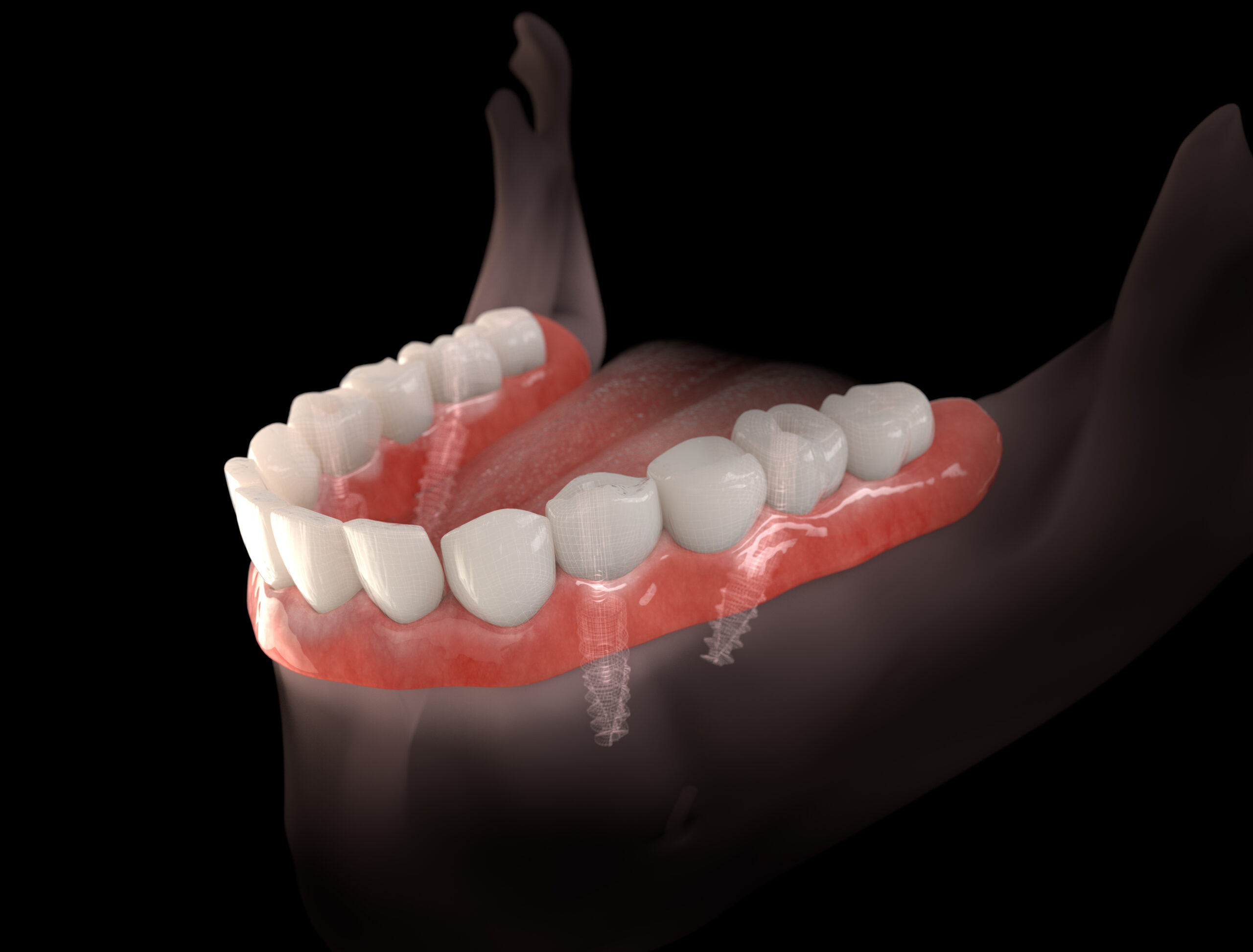
A loose lower denture creates daily frustration that affects your diet, confidence, and quality of life. Implant dentures offer a practical solution that combines the affordability of removable dentures with the stability of dental implants, creating a restoration that snaps securely onto implants and functions far better than traditional dentures.
We provide implant denture treatment at our Durham practice for patients who want implant stability without committing to fixed full arch solutions. This snap-on approach delivers meaningful improvements in retention, chewing ability, and day-to-day comfort compared to conventional dentures, allowing you to eat, speak, and smile without constant awareness of your teeth moving or coming loose.
Implant dentures are removable dentures that snap securely onto dental implants surgically placed in your jawbone. Unlike traditional dentures that rest directly on your gums and rely on suction or adhesive, implant dentures attach to implants through specialized connectors, creating a stable foundation that dramatically reduces movement during eating and speaking.
The implants serve as anchors, typically 2 to 4 per arch, that your denture clicks onto and off of for daily cleaning. This snap-on design provides significantly more retention than conventional dentures while maintaining the convenience of removability. You get the functional benefits of implant support without the complexity or cost of fixed full arch restorations.
This solution represents a middle ground between traditional dentures and permanent implant prosthetics. Implant dentures deliver meaningful improvements in stability, chewing ability, and comfort compared to conventional dentures, making them an effective option for patients who want better function but aren’t ready for or don’t require fixed implant treatment.
Implant-supported overdentures snap securely onto dental implants, dramatically reducing the movement and slippage that frustrate traditional denture wearers. You can speak, laugh, and eat without worrying about your denture shifting position or popping loose. This snap-on attachment provides confidence in social and professional situations, allowing you to engage naturally without the constant awareness that often comes with conventional dentures that rely on suction or adhesive alone.
Unlike traditional dentures that rest entirely on your gums and can create sore spots, overdentures are anchored to implants that help distribute chewing forces more evenly. This design eliminates the need for messy denture adhesives and reduces pressure on your gum tissue. The implant support also means better long-term fit, as the implants help preserve bone in those areas and prevent the deterioration that causes traditional dentures to become increasingly loose and uncomfortable over time.
The implant foundation supporting your implant denture restores significantly more chewing power than traditional dentures can provide. You'll regain the ability to enjoy a wider variety of foods, including fresh fruits, vegetables, and proteins that may have been challenging with conventional dentures. This improved function not only enhances your dining experience but also supports better nutrition and overall health through access to a more diverse and nutritious diet.
We conduct a detailed examination using advanced 3D imaging to assess your jawbone structure, oral health, and specific restoration needs. This evaluation helps us determine the number of implants required to support your implant denture—typically 2 to 4 for the lower jaw—and identify the best positions for secure, long-lasting results tailored to your anatomy.
Using digital technology, we develop a precise surgical plan that maps the optimal placement of your supporting implants. The number of implants needed varies based on your bone quality and functional requirements. This careful planning phase ensures predictable outcomes and helps us coordinate your custom implant denture fabrication.
During your surgical procedure, we place the predetermined number of implants into your jawbone at strategic locations. If you have remaining teeth that need removal, we extract them during this same appointment. The implants are positioned to provide maximum support for your snap-on implant denture while taking advantage of your strongest available bone. Many patients receive a temporary denture the same day.
Following implant placement, you'll wear a temporary restoration while your implants integrate with your bone through a process called osseointegration. This healing period typically lasts 3 to 4 months and is essential for creating the strong foundation your implant denture requires. We monitor your progress throughout this phase to ensure proper healing.
Once your implants have fully integrated, we attach your permanent overdenture with its specialized snap-on attachment system. This custom-crafted restoration clicks securely onto your implants, creating a stable, removable solution that you can confidently insert and remove for cleaning. We make any necessary adjustments to ensure proper fit, bite alignment, and your complete satisfaction with your new smile.
Implant dentures provide substantial stability improvements because they snap securely onto implants anchored in your jawbone. This attachment dramatically reduces the slipping, clicking, and movement that frustrate traditional denture wearers. You can eat a wider variety of foods including fresh vegetables, fruits, and proteins without constant worry about your denture shifting or popping loose during meals.
The snap-on nature of implant dentures means no messy adhesives and significantly better retention throughout the day. While you do remove your implant denture nightly for cleaning, during wear it stays securely in place through its connection to the implants. This stability contributes meaningfully to patient satisfaction and quality of life improvements, allowing you to speak, laugh, and eat with greater confidence than conventional dentures provide.
Implant dentures help preserve bone in the areas where implants are placed. The implants stimulate your jawbone during normal chewing, signaling your body to maintain bone density around those implants. While implant dentures don’t prevent all bone loss that occurs after tooth extraction, they do provide preservation benefits in the implant sites that help maintain better facial structure compared to traditional dentures alone.
Maintenance is straightforward with your removable design. You take your overdenture out each night for thorough cleaning using regular brushing techniques. You also clean the implant attachments in your mouth with a soft toothbrush. This cleaning routine effectively maintains oral health and keeps your restoration functioning properly. The attachment components may require periodic replacement as they experience normal wear, which we monitor during your regular checkups.


Implant dentures are a practical option for patients missing all teeth in one or both arches—particularly the lower arch—who want implant stability without committing to fixed full arch solutions. If you’re frustrated with a loose lower denture or facing the extraction of your remaining lower teeth, implant dentures treatment offers an alternative that provides meaningful improvements in retention and function compared to traditional dentures.
Adequate bone volume at implant sites is necessary for treatment success. Patients with extreme bone loss may require grafting procedures before implant placement, but Dr. Long utilizes advanced techniques to maximize the existing bone volume to avoid grafting whenever possible. We evaluate your bone condition during your initial consultation and discuss whether preparatory treatments would benefit your case.
Your overall health affects treatment candidacy. Conditions that impair healing or compromise bone metabolism may influence whether implant dentures are appropriate for you. We review your medical history and current medications to identify any factors that could affect treatment outcomes.
Commitment to the process matters. Overdenture treatment involves surgery, a healing period, and adaptation to your new restoration. Success requires following post-operative instructions, attending scheduled appointments, and maintaining good oral hygiene—including nightly removal and cleaning of your overdenture—once your permanent prosthesis is in place.
Daily care for your overdenture involves removing it each night for thorough cleaning. You’ll brush all denture surfaces with appropriate cleaning products and a soft brush. You’ll also clean the implant attachments remaining in your mouth with a soft toothbrush to remove any food particles and bacteria that may accumulate. We provide specific instructions on cleaning techniques during your treatment to ensure you can effectively maintain both your restoration and oral health.
Professional maintenance appointments are scheduled once or twice yearly. During these visits, we evaluate your implant health, inspect the attachment components for wear, and clean areas you cannot effectively reach with at-home care. This professional-level cleaning allows us to inspect the overdenture and implants for any developing issues and replace worn attachment parts as needed to maintain optimal retention.
Being mindful of what you subject your restoration to helps extend its lifespan. While implant dentures can handle normal foods much better than traditional dentures, avoiding extremely hard items and not using excessive force protects both the prosthesis and attachment system. We discuss specific care recommendations based on your restoration design and individual needs.
Regular monitoring helps catch potential problems early. We check implant stability, assess the attachment system for wear, and evaluate your oral tissues during maintenance appointments. This proactive approach allows us to address minor concerns—like worn attachment components that affect retention—before they develop into significant issues requiring extensive intervention.
A loose lower denture creates daily frustration that affects your diet, confidence, and quality of life. Implant dentures provide a practical solution that adds implant stability without requiring you to commit to the most complex or costly treatment tier. This middle-ground approach has helped countless patients move beyond the limitations of traditional dentures while staying within realistic expectations and budgets.
Dr. Long’s implant training ensures your treatment is planned and executed with precision regardless of which tier you choose. We use the same technology and protocols for overdenture cases that we apply to our most advanced implant procedures, because quality care doesn’t vary based on cost point. Our approach emphasizes clear communication and individualized care, ensuring you understand your treatment plan and feel confident in the decisions we make together. Contact our office to schedule your consultation and learn whether implant dentures are the right solution for your needs. Not every patient needs fixed implants to achieve meaningful improvement, and we’re here to help you find what works for you.
Find answers to common questions about our practice and services
Your implant denture will feel similar to a traditional denture in terms of coverage and structure, but the stability is dramatically different. Because it snaps onto implants, it won’t shift or move during eating and speaking the way traditional dentures do. Most patients report feeling much more confident and experiencing significantly better function.
Yes, implant dentures are designed to be removed daily for cleaning. You simply unsnap the denture from the implant attachments, clean both the denture and the implants separately, and snap it back into place. This removability is one of the key features that differentiates implant dentures from fixed implant restorations.
Most patients receive 2-4 implants to support a lower overdenture. The exact number depends on your bone quality, jaw anatomy, and functional requirements. Two implants provide substantial improvement over traditional dentures, while four implants offer maximum stability. We determine the optimal number during your evaluation.
No, implant dentures stay in place through their attachment to the implants, not through adhesive. The snap-on connection provides reliable retention without messy pastes or creams. You simply snap your denture onto the implant attachments each morning and remove it at night for cleaning.
Upper implant dentures have less predictable success rates compared to lower implant dentures. The upper jaw (maxilla) already provides better natural retention for traditional dentures through palate coverage, and the benefits of implant support are less dramatic. When upper arch treatment needs improvement, we typically recommend either optimizing traditional denture fit or advancing to fixed implant solutions, depending on your specific situation.
In many cases, yes. The implants placed for your implant denture can potentially be incorporated into a fixed restoration if you decide to upgrade later. However, this depends on several factors including implant positions, number of implants, and your bone condition at that time. We can discuss future options during your initial consultation.